Rebuilding home far from home
Behind every displacement figure is a life interrupted. Tatyana and Lidia had to leave everything behind because of the war in Ukraine. Today they are rebuilding their homes, their health and their dignity.
By the end of 2025, 117.8 million people worldwide had been forced to flee their homes because of conflict, violence, persecution or human rights violations. More than half of them, 68.7 million, are internally displaced: people who have lost their homes but remain within their own country’s borders.
Ukraine is one of the faces of this reality. According to the International Organization for Migration (IOM), around 3.9 million people were still internally displaced in the country in May 2026. Many have been away from home for years, living in shelters, rented rooms or with relatives, not knowing when, or whether, they will ever be able to return.
Displacement does not affect everyone equally. Women, older people and people with disabilities face added risks: worsening health, isolation, poverty and, far too often, violence.
Tatyana, 65: “Everyone here dreams of going home”
Tatyana arrived in Dnipro from Lysychansk, in the Luhansk region, at the end of June 2022. She left on the very last transport, evacuated alone in a minibus with foreigners and an interpreter. A journey that should have taken a few hours lasted four days.
She arrived with almost nothing. “I arrived here wearing nothing but a bathrobe and slippers,” she remembers. At the shelter she was registered straight away and given winter clothes, a coat, a warm sweater, pots and pans. Today she values what she has: “We have a roof over our heads, a shower, and a kitchen where we cook our meals. It’s warm, comfortable and bright; we’ve been given everything we need. So, thank God, we’re alive.”
The pain of leaving has never left her. A month after she fled, her father died in Lysychansk. She had been able to bury her mother, but not him. “My biggest sin is that I left, and my parents’ graves are still there. It just lives inside me, in my heart. I want to go home. Everyone here dreams of going home.”
The war has followed her to Dnipro too. Missile strikes and Shahed drones bring back what she lived through in her hometown. “Everyone was sitting in the hallway right here on the first floor. Everyone was shaking. The women were crying. The children were clinging to their parents.”
“Once the war ends, where do we go from here? What awaits us? As long as you’re living here, that means you’re still alive. But what happens next is unclear.”
Once the stress of the first months wore off, her health declined. Today she walks on crutches, and medication and incontinence products take almost her entire pension. “I really dream of getting back on my feet and walking.”
Even so, Tatyana has turned the shelter into a place where people come together. She was a librarian for 40 years, and as soon as she arrived she began organising literary evenings. “I’m a librarian through and through, I couldn’t do without it,” she explains. She has organised cultural gatherings with local writers, poets and bards from Dnipro, building bridges with the community that hosts them. “Locals come to see us, and we treat them to free tea, coffee and candy. The kids are happy. And every time, more and more locals come to visit us.”
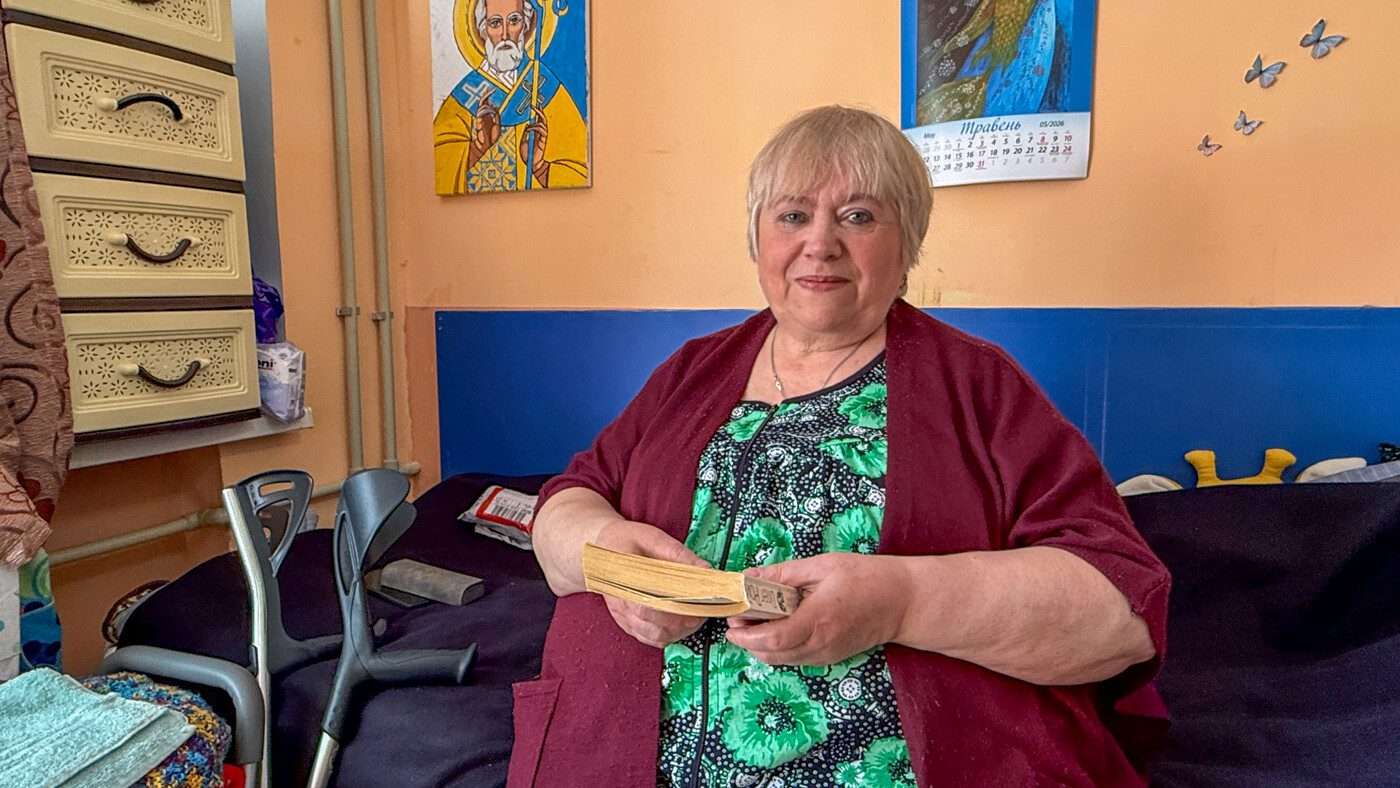
Her wish, like that of so many displaced people, is peace: “We all dream of peace. We dream that at least Europe will help, will take action, so that peace returns sooner. How many more people have to die? How many more?”
Lidia, 58: “I still have the strength”
For Lidia, displacement came while she was escaping another kind of violence. She is a mother of three: two grown-up children and Kostia, the youngest, whom she has raised since he was one year old and who calls her “Mom”. When the war came, she had to flee Kamianka-Dniprovska, in the Zaporizhzhia region. “The first time was stressful, when we fled here from Kamianka-Dniprovska. We stayed with our older kids. Then we rented a place in Lyubymivka.”
For nine years she lived with violence inside her own home. She stayed because she feared that, if she left, the abuse would turn on the child. “I probably shouldn’t have put up with it for all those nine years. I was just more worried about the child. I knew that if I wasn’t the target of the beating, it would shift to the child.”
One night in November, after yet another attack, she ran out of the house. It was not the first time, and she decided she had to do something. She decided to leave because she wanted to live.
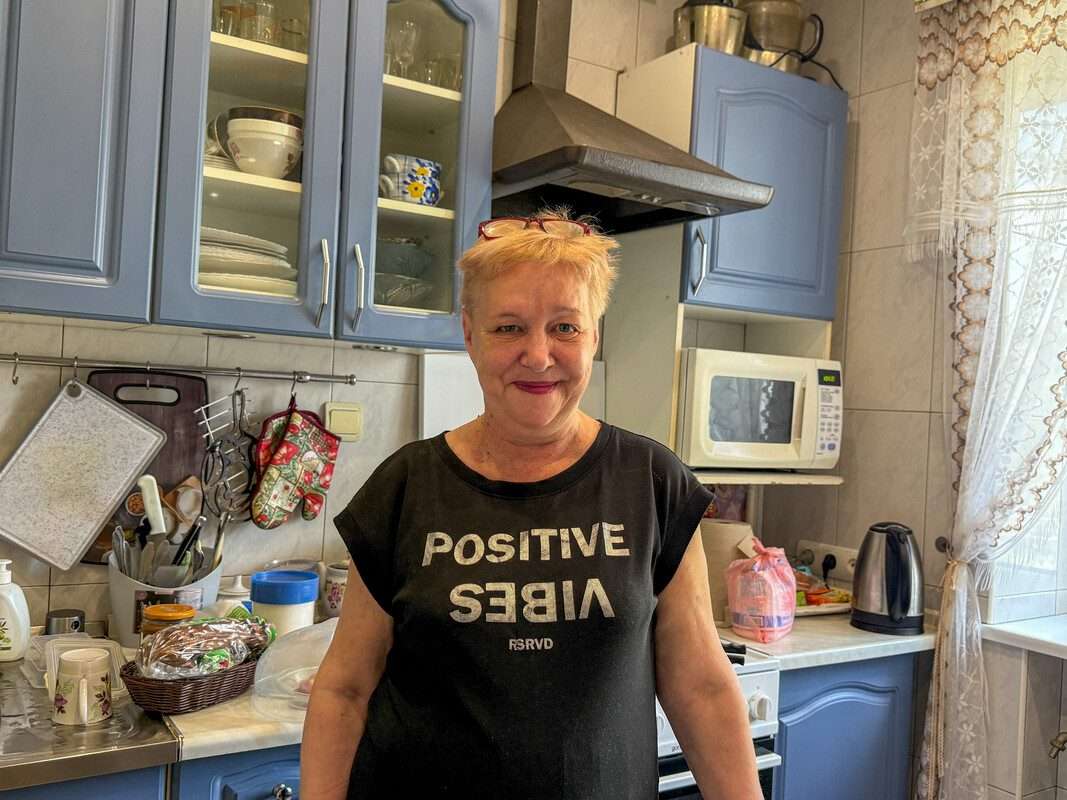
The Ukrainian organisation Martin Club has given her financial, psychological and legal support. Lidia hopes this support will help her win her court case against her former partner, protect Kostia and find work again. She has recently moved into a new home, close to her daughters and granddaughters. What she wants is simple: “Quiet, peace, finally a place of our own, so that no one bothers us. Peace of mind first and foremost.”
“I still have the strength. So I’m going to fight tooth and nail. I won’t give my child to anyone, no matter what they tell me.”
Protecting those who have lost everything
The stories of Tatyana and Lidia reflect the work of a humanitarian project funded by the European Union through its Humanitarian Aid department (ECHO). ActionAid implemented it in eastern Ukraine between April 2025 and May 2026, in consortium with local organisations.
The project worked to ensure that displaced people, especially those most at risk, have protection, care and the chance to rebuild their lives. Part of the project focused on supporting women survivors of gender-based and domestic violence, many of them displaced women who, like Lidia, face violence on top of the loss of their home. This work was carried out by our local partner Martin Club, through service points in Dnipro, Kamianske, Pavlohrad and Kryvyi Rih and mobile teams reaching 26 communities. Its case managers work with each woman to assess the risks she faces and what she needs, agree a safety plan with her and support her in accessing legal, medical and social services. As a result, more than 1,000 people received individual case management and more than 2,000 received psychosocial support and crisis intervention. In the most urgent situations, people received emergency cash assistance to cover medical care, safe transport or relocation to a safe place.
The project also invested in community-based protection, built on the idea that no one knows a neighbourhood’s risks better than the people who live there. That is why we worked with 11 community-based organisations, chosen for their local presence. One of them is SVITLO KULTURY, which supports Tatyana and other displaced people in Dnipro. Each organisation received support tailored to its work and the people it serves: hygiene and dignity items, power and IT equipment, assistive and accessibility products, and materials to deliver its services. Their teams were also trained in preventing gender-based violence, discrimination and exploitation, and shared experiences with other local organisations.
In a world where almost 118 million people have been forcibly displaced, humanitarian aid can make the difference between surviving and living again. As Tatyana puts it: “As long as you’re living here, that means you’re still alive.” Our commitment is to make sure they also have a future.